AIAA SciTech 2027AIAA SciTech Forum
FalconWing

FalconWing: An Ultra-Light Indoor Fixed-Wing UAV Platform for Vision-Based Autonomy

Yan Miao, Will Shen, Hang Cui, Sayan Mitra

University of Illinois Urbana-Champaign

An ultra-light indoor fixed-wing platform with a Gaussian-splat twin: vision-only leader-follower and zero-shot autonomous landing.

Fixed-wing UMX
Platform

Fixed-wing UMX

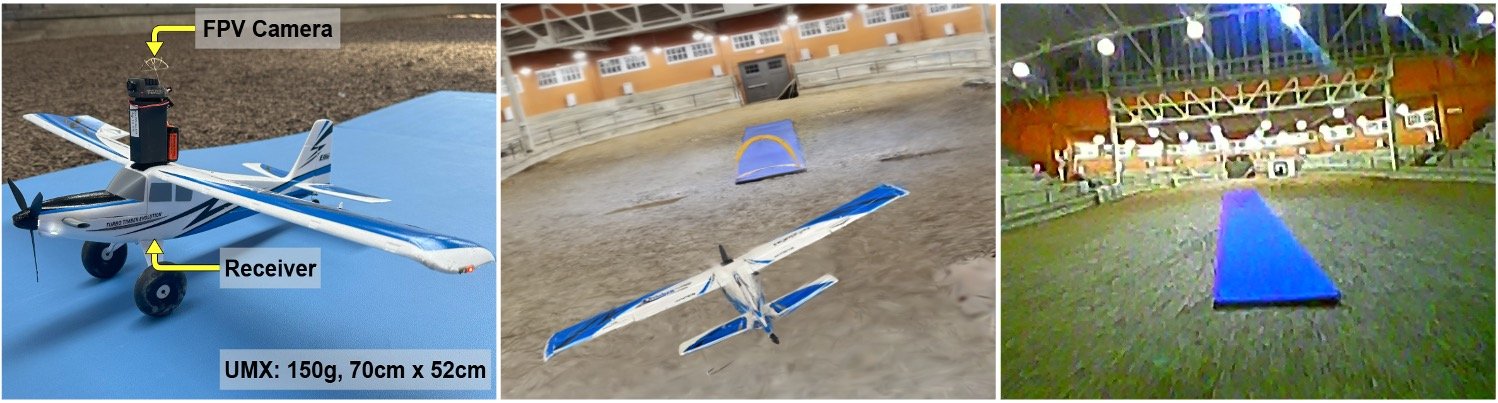
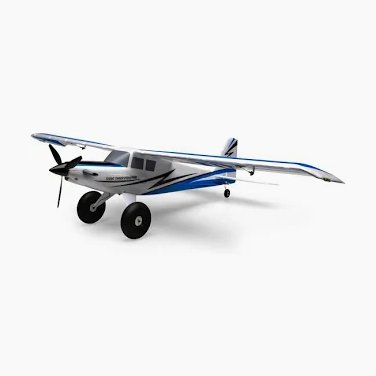
137 g airframe + 9 g analog camera, 150 g total. Offboard compute. Released as an open flight kit.

150 gall-up weight: 137 g airframe, 9 g camera
80%zero-shot autonomous landing success, 8 of 10 trials
100%leader-follower tracking over 30 trials, three maneuver types

Abstract

We introduce FalconWing, an ultra-light (150 g) indoor fixed-wing UAV platform for vision-based autonomy. Controlled indoor environments enable year-round repeatable UAV experiments but impose strict weight and maneuverability limits on the UAV, motivating our ultra-light FalconWing design. FalconWing couples a lightweight hardware stack (137 g airframe with a 9 g camera) and offboard computation with a software stack featuring a photorealistic 3D Gaussian Splat (GSplat) simulator for developing and evaluating vision-based controllers.

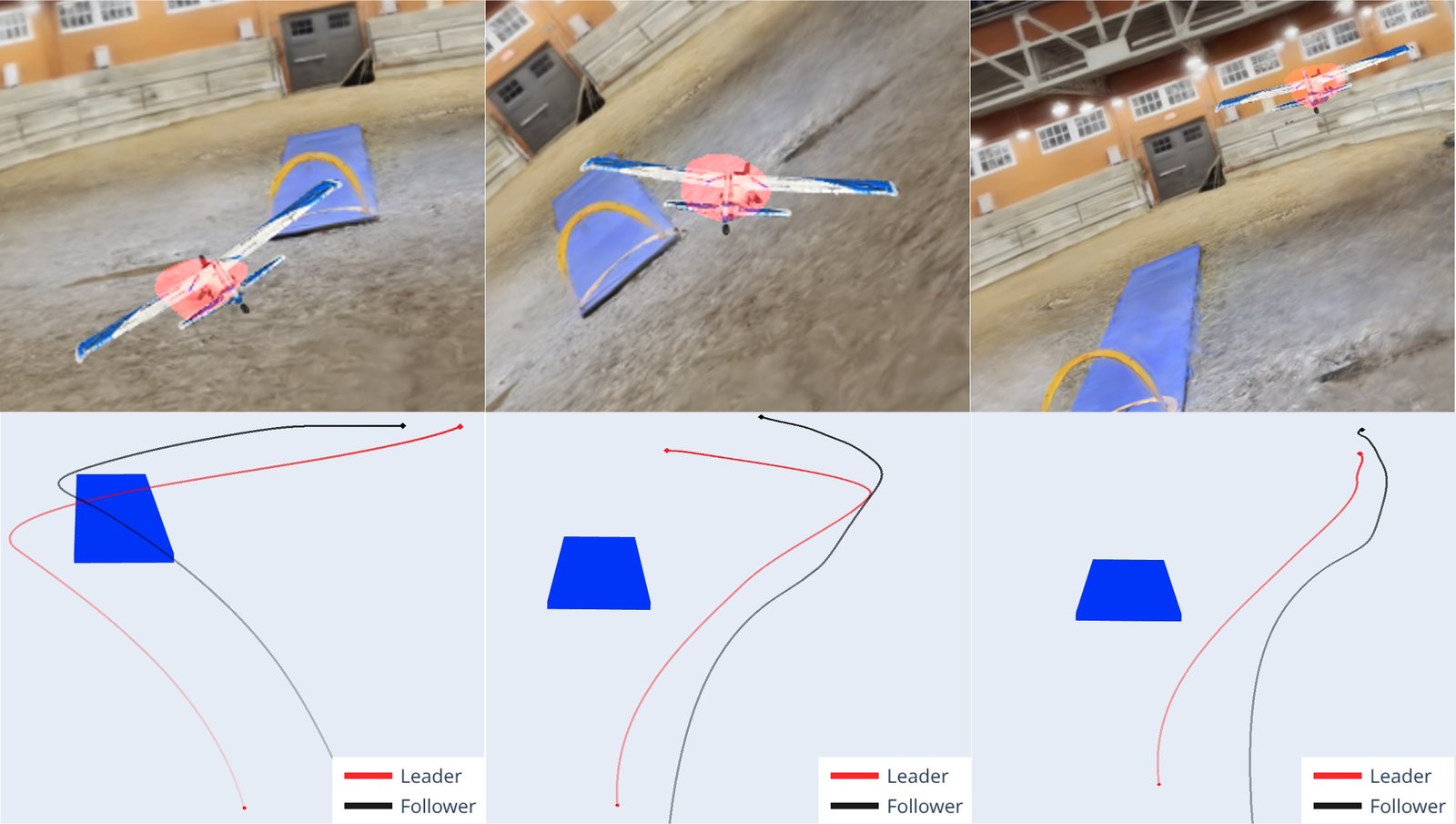
We validate FalconWing on two challenging vision-based aerial case studies. In the leader-follower case study, our best vision-based controller, trained via imitation learning on GSplat-rendered data augmented with domain randomization, achieves 100% tracking success across 3 types of leader maneuvers over 30 trials and shows robustness to the leader's appearance shifts in simulation. In the autonomous landing case study, our vision-based controller trained purely in simulation transfers zero-shot to real hardware, achieving an 80% success rate over ten landing trials.

We will release hardware designs, GSplat scenes, and dynamics models to make FalconWing an open-source flight kit for engineering students and research labs.
Method

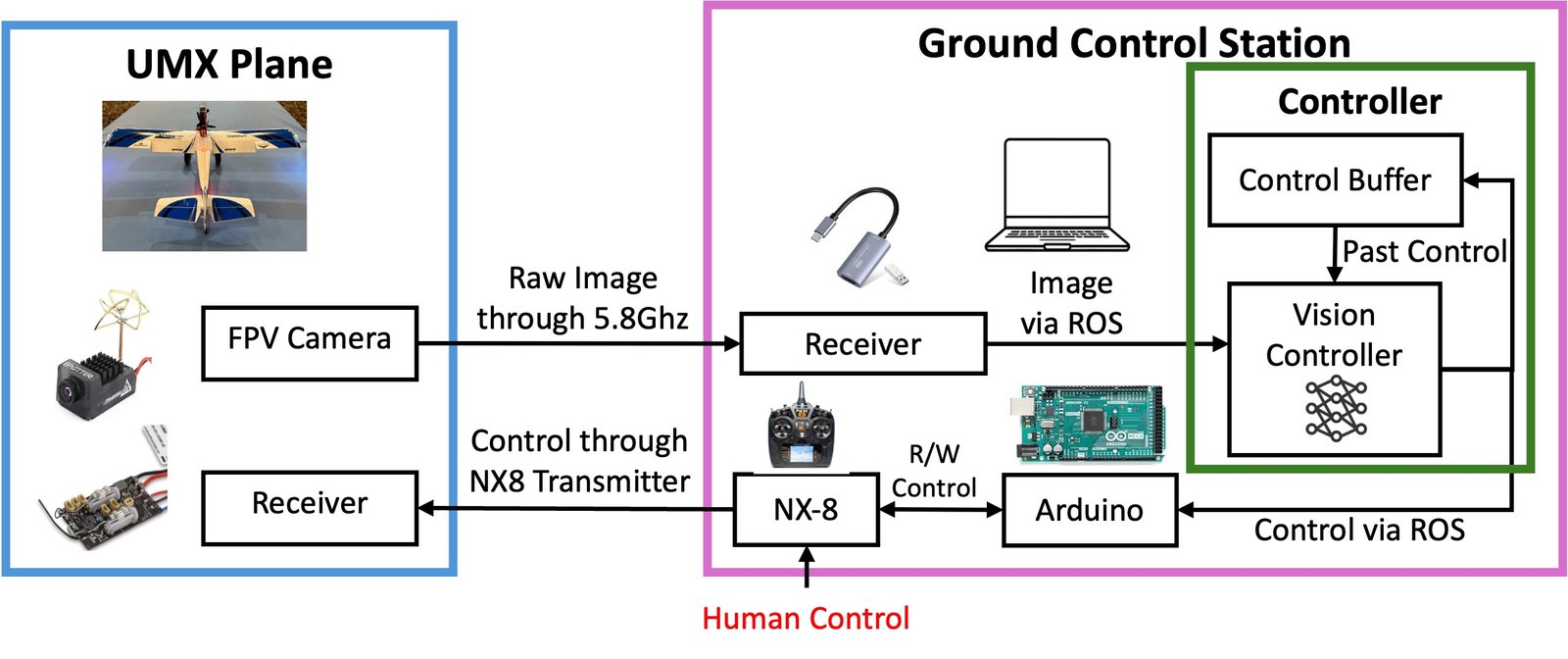
The FalconWing stack: 137 g airframe + 9 g camera, offboard compute, and a GSplat simulator for controller development.

The FalconWing stack: 137 g airframe + 9 g camera, offboard compute, and a GSplat simulator for controller development.

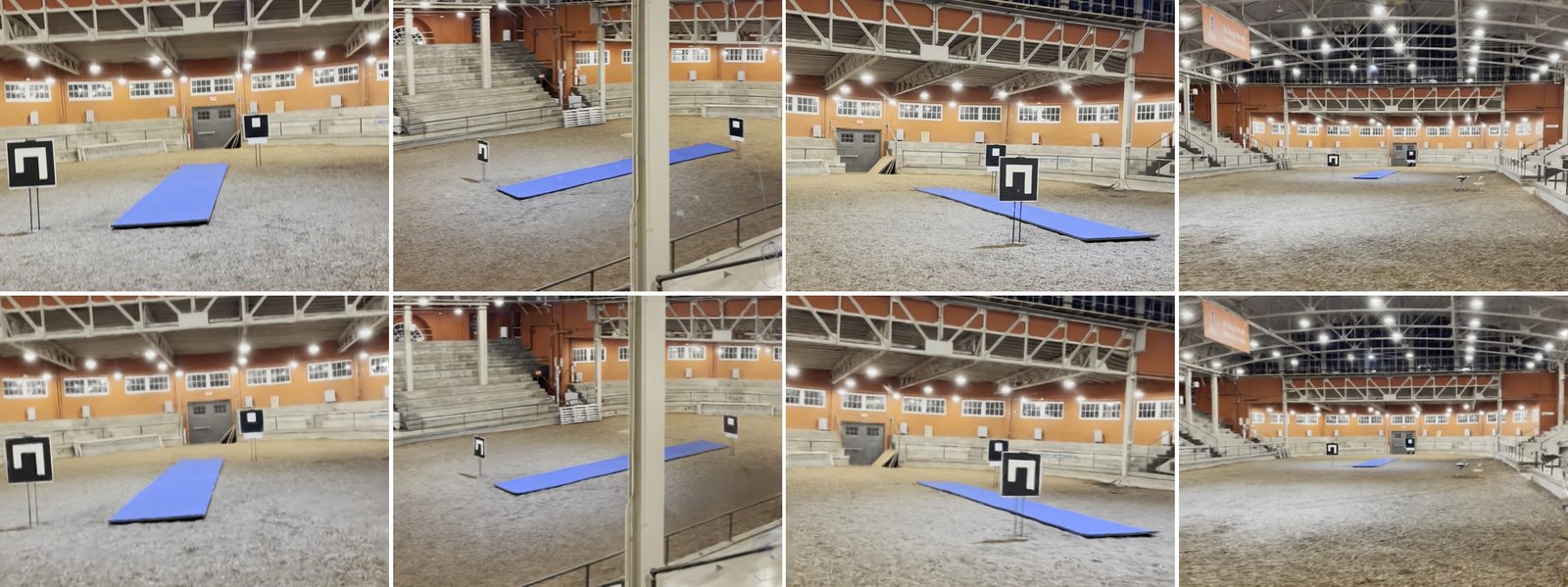
The photorealistic Gaussian-splat digital twin of the indoor flight space.

The photorealistic Gaussian-splat digital twin of the indoor flight space.

Results

FalconWing: an ultra-light (150 g) indoor fixed-wing platform.
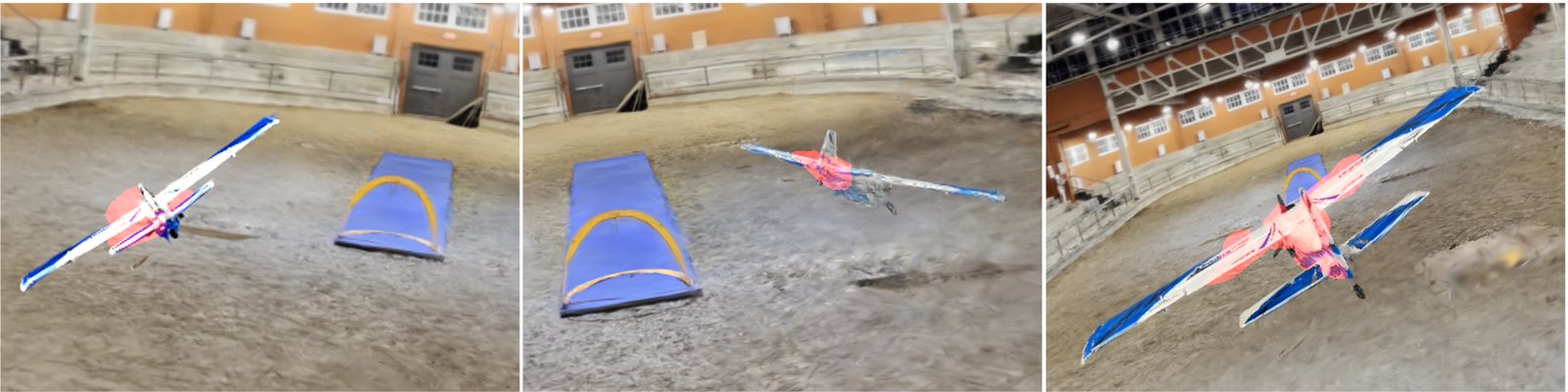
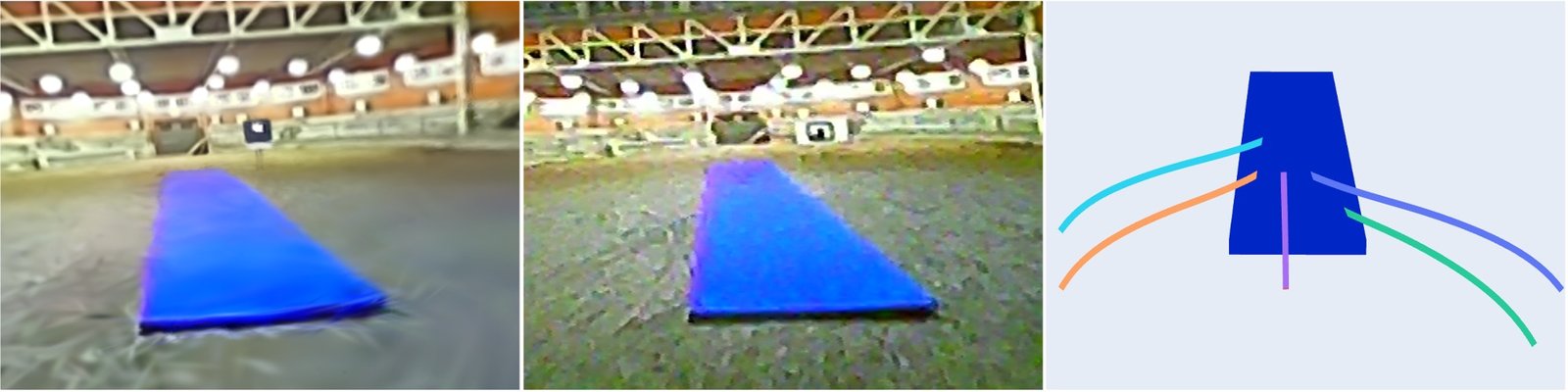
Domain randomization on GSplat renders for robust vision-based control.
Leader-follower case study: 100% tracking success over 30 trials.
Autonomous landing: zero-shot sim-to-real, 8/10 success.

BibTeX

@inproceedings{miao2027falconwing,
  title     = {FalconWing: An Ultra-Light Indoor Fixed-Wing UAV Platform for Vision-Based Autonomy},
  author    = {Miao, Yan and Shen, Will and Cui, Hang and Mitra, Sayan},
  booktitle = {AIAA SciTech Forum},
  year      = {2027}
}