ICRA 2026IEEE International Conference on Robotics and Automation
FalconGym 2.0

Performance-Guided Refinement for Visual Aerial Navigation using Editable Gaussian Splatting in FalconGym 2.0

Yan Miao, Ege Yuceel, Georgios Fainekos, Bardh Hoxha, Hideki Okamoto, Sayan Mitra

University of Illinois Urbana-Champaign · Toyota Motor North America R&D

An Edit API rewrites the Gaussian-splat scene in milliseconds, and a refinement loop spends every render where the policy is weakest.

Quadrotor
Platform

Quadrotor

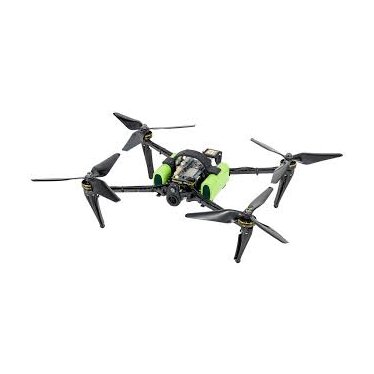
Hardware trials on a quadrotor; fixed-wing and quadrotor case studies in the editable twin.

98.6%success on real hardware, 69 of 70 gates over 30 trials
100%on three unseen simulated tracks from one policy, no retraining
msto add, move, scale, or delete scene objects via the Edit API

Abstract

Visual policy design is crucial for aerial navigation. However, state-of-the-art visual policies often overfit to a single track and their performance degrades when track geometry changes. We develop FalconGym 2.0, a photorealistic simulation framework built on Gaussian Splatting (GSplat) with an Edit API that programmatically generates diverse static and dynamic tracks in milliseconds.

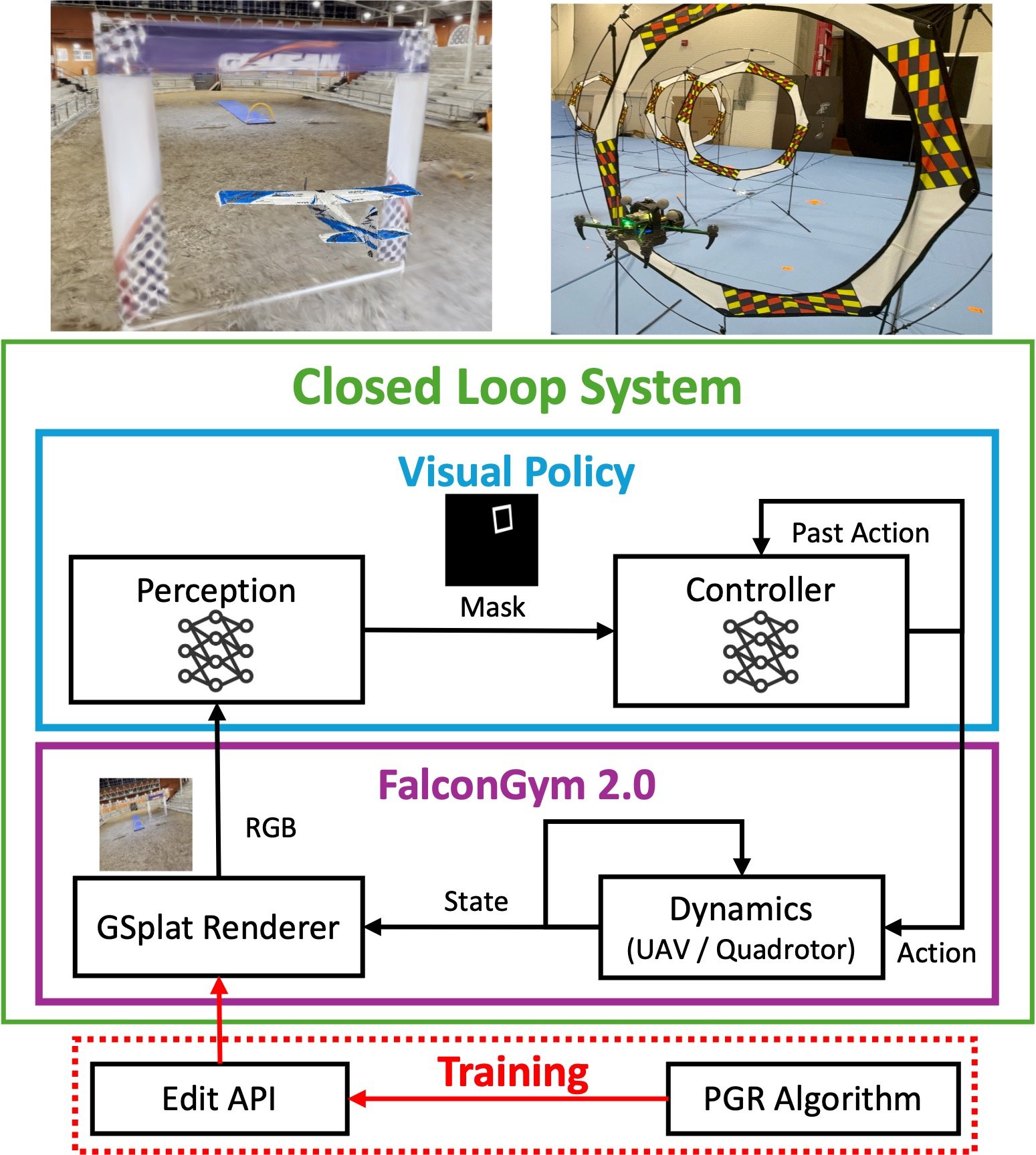
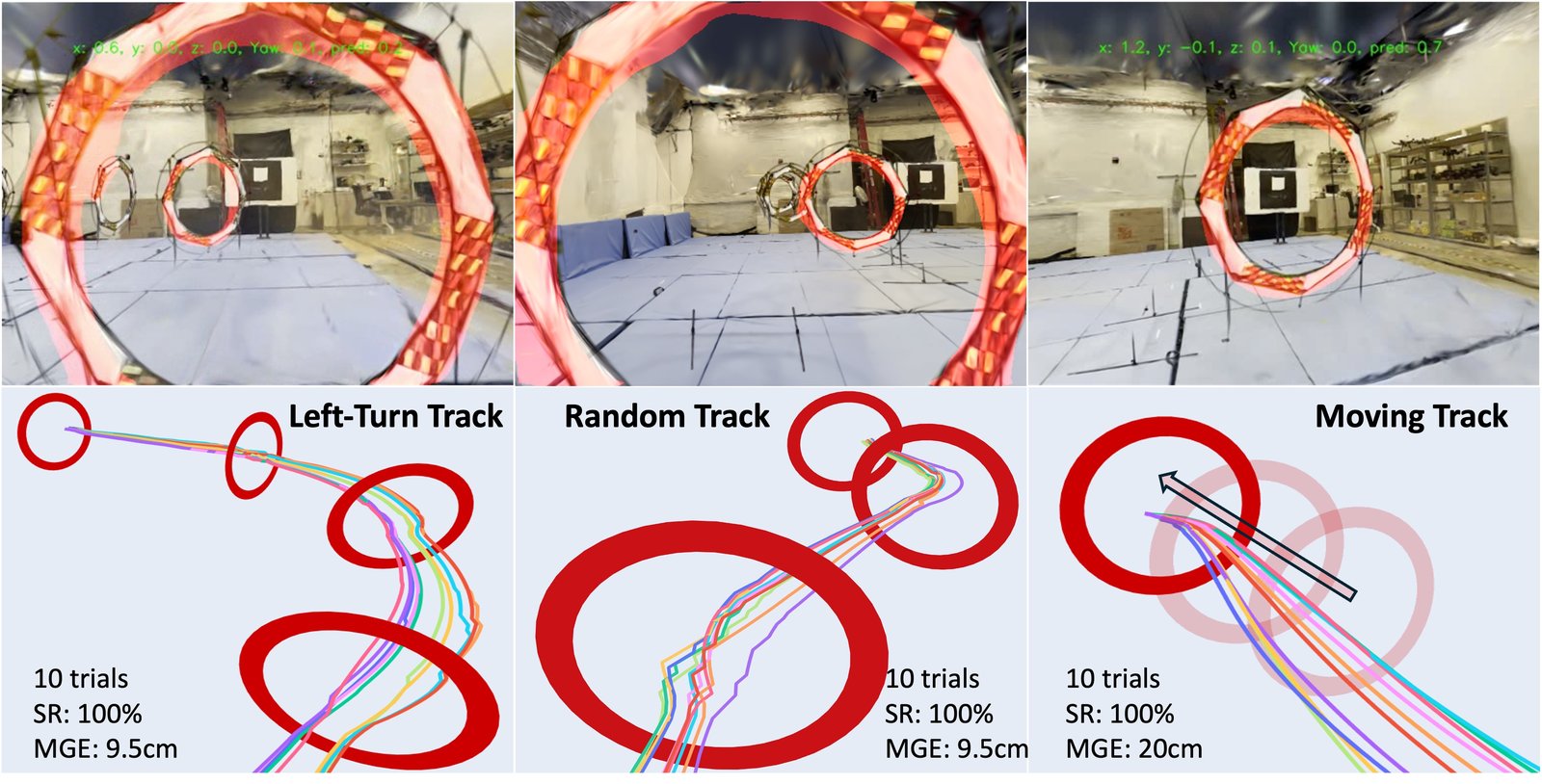
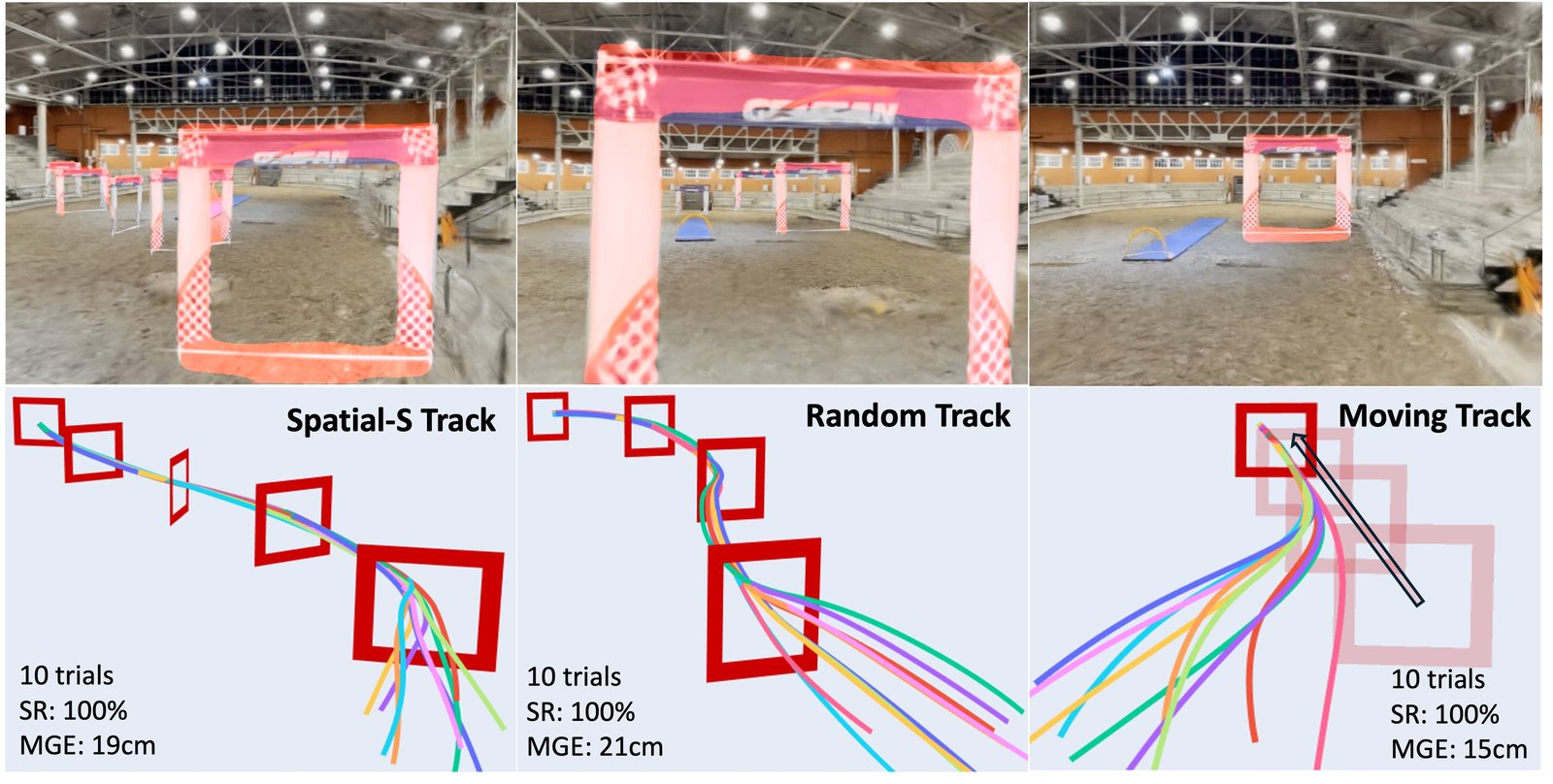
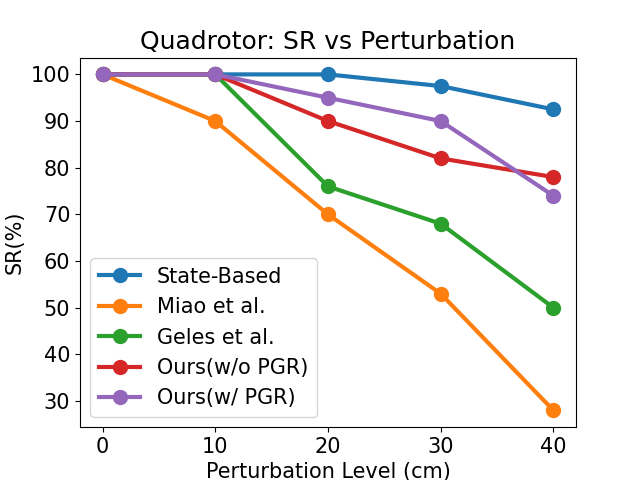
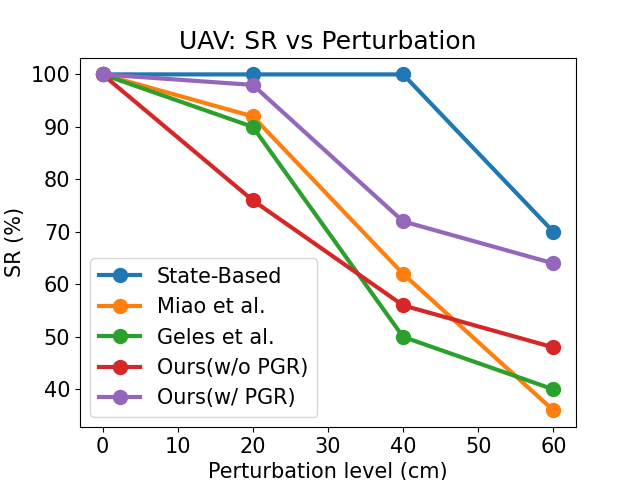
Leveraging FalconGym 2.0's editability, we propose a Performance-Guided Refinement (PGR) algorithm, which concentrates visual-policy training on challenging tracks while iteratively improving performance. Across two case studies (fixed-wing UAVs and quadrotors) with distinct dynamics and environments, we show that a single visual policy trained with PGR in FalconGym 2.0 outperforms state-of-the-art baselines in generalization and robustness: it generalizes to three unseen tracks with 100% success without per-track retraining and maintains higher success rates under gate-pose perturbations.

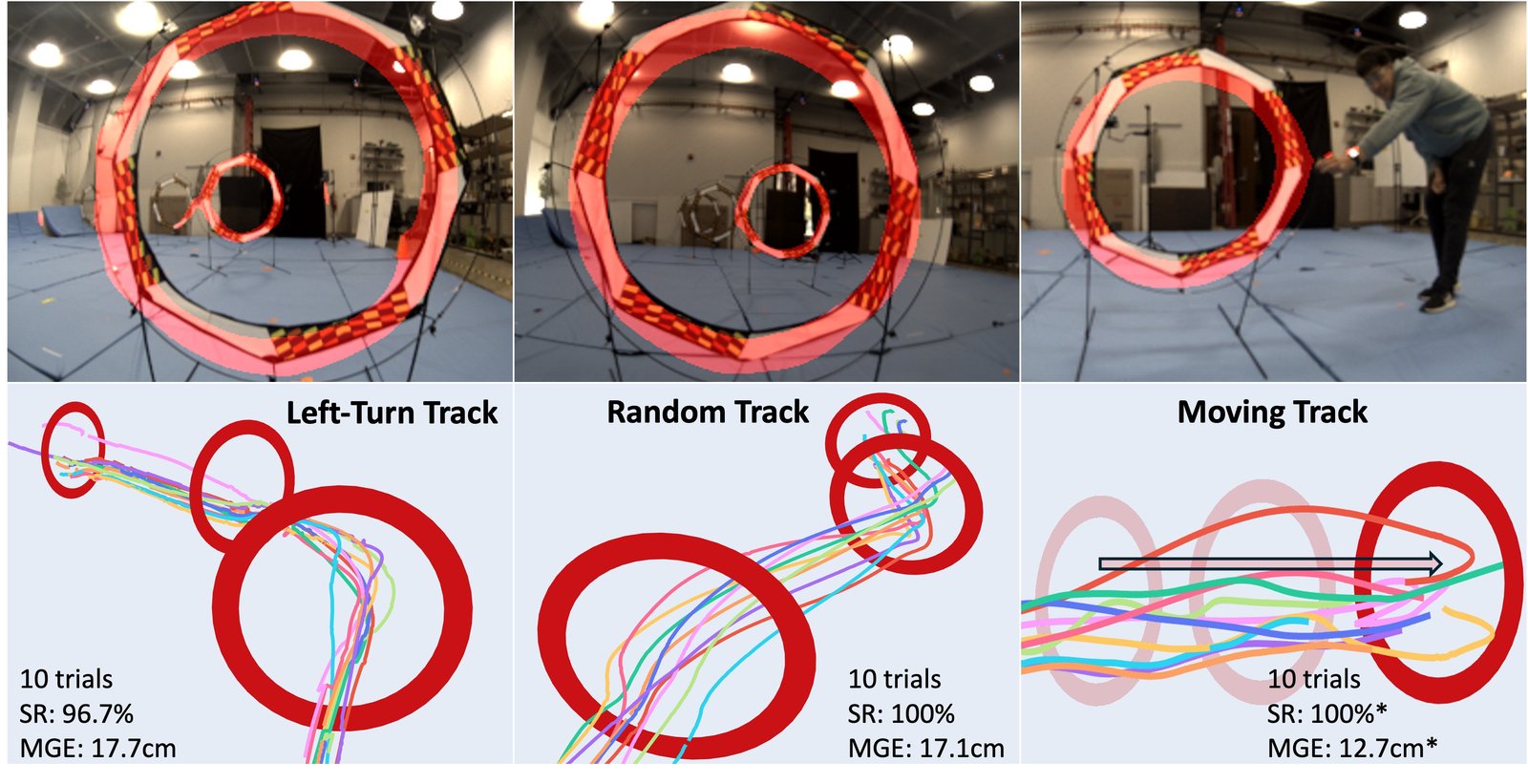
Finally, we demonstrate zero-shot sim-to-real transfer of the PGR-trained visual policy to quadrotor hardware, achieving a 98.6% success rate (69/70 gates) over 30 trials across two three-gate tracks and one moving-gate track.
Method

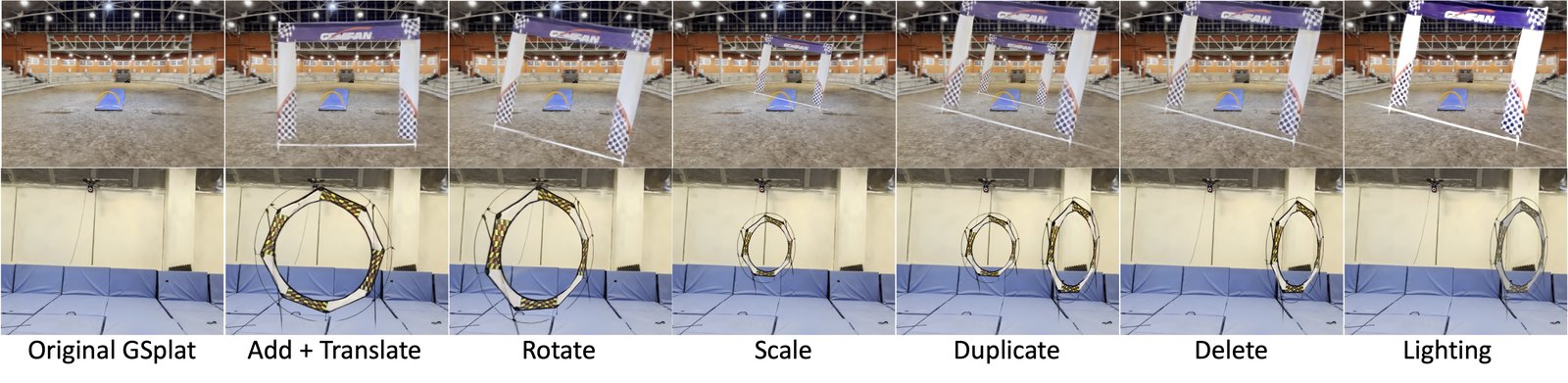
The Edit API: programmatic add / delete / translate / rotate / scale / duplicate of scene Gaussians, generating new tracks in milliseconds.

The Edit API: programmatic add / delete / translate / rotate / scale / duplicate of scene Gaussians, generating new tracks in milliseconds.

FalconGym 2.0 closed-loop training and evaluation pipeline with Performance-Guided Refinement.

FalconGym 2.0 closed-loop training and evaluation pipeline with Performance-Guided Refinement.

Results

Real-hardware trajectories: 98.6% success (69/70 gates) over 30 trials, including a moving gate.
Quadrotor case study: generalization to unseen tracks without per-track retraining.
Fixed-wing case study: the same PGR recipe on distinct dynamics.
Quadrotor success rates: PGR vs. baselines under track variation.
Fixed-wing success rates under gate-pose perturbations.

BibTeX

@inproceedings{MiaoEtAl:ICRA26,
  title     = {Performance-Guided Refinement for Visual Aerial Navigation using Editable Gaussian Splatting in FalconGym 2.0},
  author    = {Miao, Yan and Yuceel, Ege and Fainekos, Georgios and Hoxha, Bardh and Okamoto, Hideki and Mitra, Sayan},
  booktitle = {Proceedings of IEEE International Conference on Robotics and Automation (ICRA)},
  year      = {2026}
}